Energy
Strategic Realignment in Global Offshore Wind Development
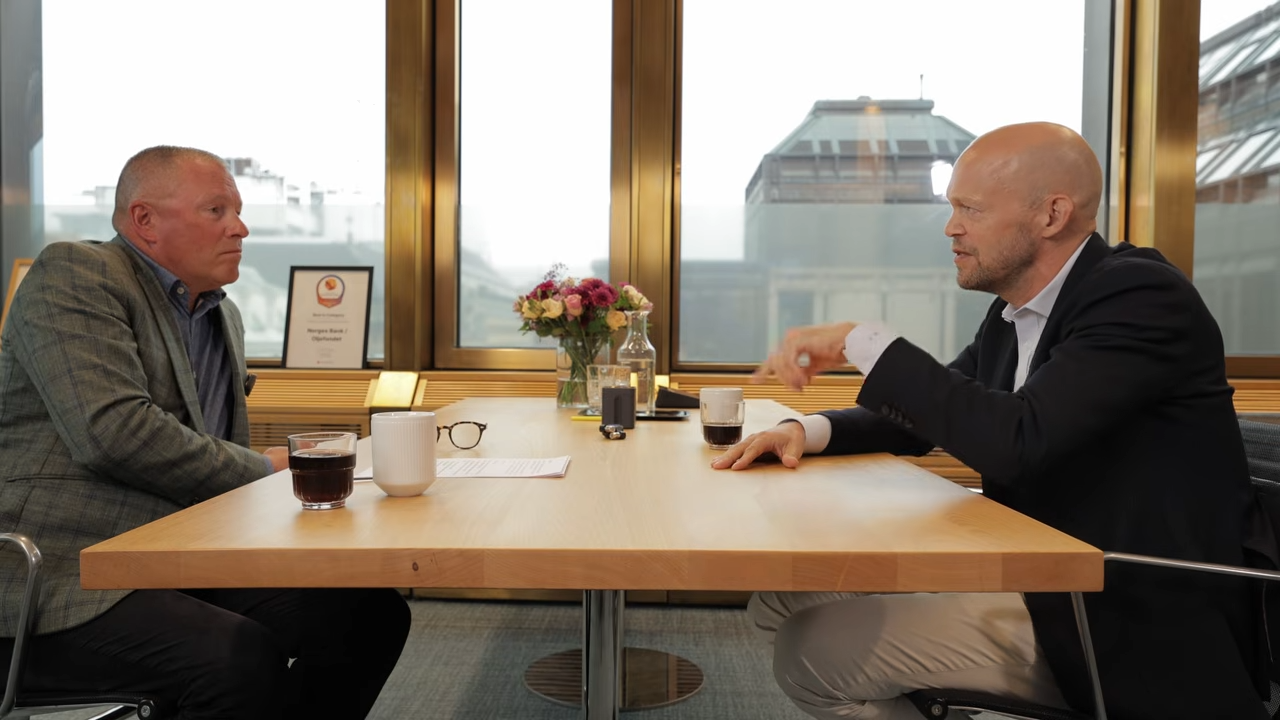
In an August 2026 Norges Bank Investment Management podcast, Ørsted CEO Rasmus Errboe details the offshore wind sector’s transition from rapid cost reduction to a period of severe macroeconomic and regulatory volatility.
Summary
In an August 2026 Norges Bank Investment Management podcast, Ørsted CEO Rasmus Errboe details the offshore wind sector’s transition from rapid cost reduction to a period of severe macroeconomic and regulatory volatility. The industry’s recent challenges are driven primarily by surging interest rates, supply chain inflation, and unpredictable government interventions, exemplified by a sudden US stop-work order on a nearly complete project. Consequently, major developers are executing massive capital raises, pivoting exclusively to proven bottom-fixed technologies, and leveraging litigation to protect sunk investments, fundamentally reshaping global renewable energy deployment strategies.
Take-Home Messages
- Regulatory Risk: Sudden governmental stop-work orders can instantly transform near-complete infrastructure assets into severe financial liabilities, necessitating robust contractual protections.
- Cost Dynamics: A 50% increase in the levelized cost of electricity between 2020 and 2025 has invalidated previous low-cost assumptions, forcing a sector-wide reset of tender expectations.
- Strategic Focus: Leading developers are abandoning speculative technologies like floating wind to concentrate capital exclusively on scalable, cost-competitive bottom-fixed offshore installations.
- Supply Chain Resilience: Massive, targeted investments in European domestic manufacturing are actively displacing reliance on foreign components to ensure quality and energy security.
- Geopolitical Drivers: Energy affordability and security, rather than climate goals alone, now serve as the primary, durable political drivers for accelerating renewable energy adoption in Europe.
Overview
The offshore wind industry has experienced a dramatic reversal in its cost trajectory, shifting from a 70% reduction in the levelized cost of electricity between 2015 and 2020 to a 50% increase by 2025. This inflation is driven by rising interest rates, supply chain bottlenecks, and overly competitive tender frameworks that underestimated macroeconomic risks. As a result, numerous won tenders have failed to reach construction, forcing a fundamental reset of industry economics and investor expectations.
In response to acute regulatory volatility, major developers are adopting aggressive risk management and legal strategies to protect their investments. A prominent example includes a sudden US stop-work order on an 80% complete project, which triggered an 8 billion euro capital raise and subsequent litigation against the government. These actions highlight that securing and defending long-term permits is now as critical as the physical construction of the assets themselves.
Concurrently, corporate strategies are narrowing to focus exclusively on proven, scalable technologies that guarantee near-term affordability. Developers have actively divested from floating wind, green fuels, and onshore assets to concentrate resources on bottom-fixed offshore installations. This disciplined capital allocation ensures that limited financial resources are directed toward projects with the highest probability of successful, timely completion.
Finally, the geopolitical landscape has fundamentally altered the value proposition of renewable energy, elevating it from a climate initiative to a core component of national security. Recent global conflicts have exposed the severe economic vulnerabilities of relying on imported fossil fuels, making domestic renewable generation the most affordable long-term solution. This shift is catalyzing unprecedented political commitment and capital investment into European energy infrastructure.
Implications and Future Outlook
Organizations must fundamentally redesign their project finance models to account for persistent macroeconomic volatility and regulatory unpredictability. Relying on historical cost-down curves is no longer viable, requiring developers to build higher contingency buffers and secure more flexible capital structures. Investors will increasingly demand proof of robust risk mitigation strategies before committing funds to multi-decade infrastructure projects.
Policymakers face a critical tradeoff between driving down short-term tender prices and ensuring long-term project viability and supply chain resilience. Overly aggressive, price-only auction mechanisms have proven destructive, leading to widespread project cancellations and supply chain strain. Governments must redesign procurement frameworks to reward grid stability, domestic manufacturing, and realistic cost projections over absolute lowest bids.
The energy sector must accelerate the integration of complementary technologies to manage the projected doubling of electricity demand by 2050. Offshore wind cannot operate in isolation; it requires synchronized investments in onshore wind, solar, battery storage, and grid transmission upgrades. Failure to plan for this systemic interdependence will result in severe grid congestion and undermine the affordability of the broader energy transition.
Some Key Information Gaps
- What specific contractual mechanisms can developers include to mitigate the financial impact of sudden government stop-work orders? Identifying robust contractual safeguards can directly reduce capital risk and improve the bankability of future cross-border infrastructure projects.
- Which specific supply chain bottlenecks contributed most significantly to the 50% increase in offshore wind LCOE between 2020 and 2025? Understanding precise inflation drivers is critical for policymakers to target subsidies where they will most effectively restore project viability.
- At what point in the future is floating offshore wind expected to reach cost parity with bottom-fixed installations in suitable markets? Answering this helps capital allocators determine when to pivot to next-generation solutions without sacrificing financial discipline.
- How does the perception of energy security versus climate change alter the political coalition supporting renewable energy expansion? This is vital for understanding how shifting geopolitical narratives can build more durable, bipartisan support for long-term energy policies.
- What institutional frameworks can ensure bipartisan continuity for multi-decade energy infrastructure projects across changing political administrations? Addressing this is essential for designing resilient regulatory environments that protect sunk costs and maintain investor confidence.
Broader Implications
Shift in Capital Allocation Paradigms
The era of cheap capital and predictable cost reductions in renewable energy has definitively ended, forcing a maturation of the sector. Investors and developers must now prioritize resilience, optionality, and rigorous risk management over aggressive volume expansion. This shift will likely consolidate the industry around well-capitalized players capable of absorbing regulatory shocks and financing massive equity raises.
Redefinition of Energy Security Architecture
Geopolitical instability has permanently elevated domestic renewable energy from a supplementary environmental goal to a foundational pillar of national security. This redefinition guarantees sustained, bipartisan political support for renewable infrastructure, insulating it somewhat from short-term electoral fluctuations. Consequently, nations will increasingly view energy independence as a non-negotiable strategic imperative, driving long-term policy consistency.
Evolution of Supply Chain Sovereignty
The recognition of critical vulnerabilities in globalized manufacturing has triggered a decisive move toward regional supply chain sovereignty in the energy sector. Massive public and private investments in domestic ports, vessels, and turbine manufacturing are reshaping global trade flows. This localization will initially increase upfront capital costs but will ultimately yield a more resilient, secure, and politically defensible energy infrastructure.