
Bitcoin mining emissions in China: what the model shows
Explore how hardware, geography, and grid assumptions shape modeled Bitcoin mining emissions in China and limit policy claims.
Read the analysis
Author
Dr. Murray Rudd is an applied environmental economist and policy researcher. His full attention is now on the economic, social, technical, and environmental impacts and potential of emerging technologies.
Explore how hardware, geography, and grid assumptions shape modeled Bitcoin mining emissions in China and limit policy claims.
Read the analysis
Explore how transaction cost economics links asset specificity, adaptation, and governance while exposing its empirical and policy limits.
Read the analysis
Explore how transaction-specific investment, frequency, and uncertainty shape the choice among markets, contracts, and hierarchy.
Read the analysis
Explore how fiscal dominance can make tighter money raise future inflation when debt service outruns growth and fiscal policy does not adjust.
Read the analysis
Explore how Bitcoin mining incentives, energy mix, security, and system boundaries shape credible environmental research.
Read the analysis
Explore how hash-based signatures could give Bitcoin a post-quantum fallback while reshaping wallets, fees, custody, and migration.
Read the analysis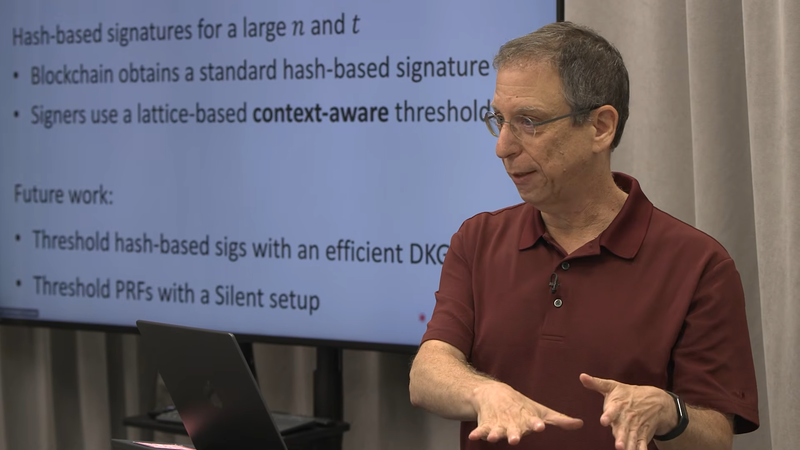
Explore how Bitcoin could adopt post-quantum signatures while managing wallet state, custody, block-space costs, and dormant-coin recovery.
Read the analysis
Explore how explicit uncertainty, calibration, and Bayesian updating could make AI decisions more reliable, adaptive, and accountable.
Read the analysis
Explore how LLMs could reshape social science and why synthetic participants require rigorous validation before supporting human inference.
Read the analysis
Explore how merchant guilds coordinated boycotts and enforced member compliance to make rulers’ protection promises credible.
Read the analysis
Explore how liquidity, security design, macro conditions, and disciplined capital management shape Bitcoin treasury strategies.
Read the analysis
Explore how AI compute concentration could reshape infrastructure, credit markets, regulation, fiscal systems, and economic power.
Read the analysis